RULES · SCORING
Badminton scoring made simple
Every rally produces one point. A normal match is best of three games, and each game is played to 21—with two small exceptions near the end.
Reviewed against the BWF Laws of Badminton · Updated 31 August 2026Remember these three things
- 01Win a rally and you win a point, whether or not you served.
- 02The first side to 21 wins the game only if it leads by at least two.
- 03At 29–29, the next point ends the game at 30.
INTERACTIVE SCORE EXAMPLES
Tap a score to see what happens next.
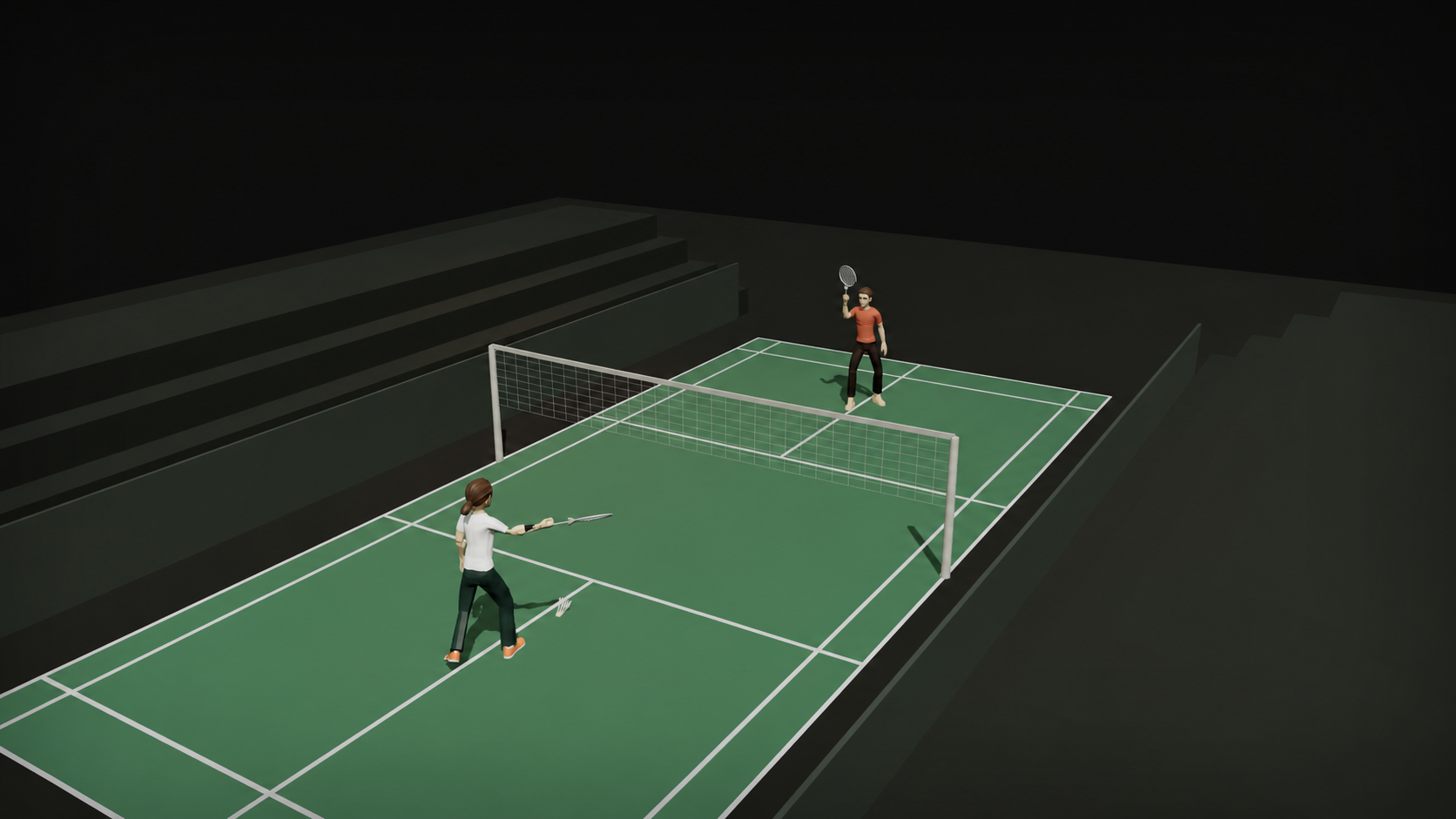
The 3D court shows the rally that creates the next point. The score card explains whether the game continues or ends.
Loading the 3D rally…
8–6 → 9–6The player wins the rally and adds one point. Serving is not required to score.
Drag to rotate · Double-click to reset01 / ONE RALLY, ONE POINT
You can score while receiving
Modern badminton uses rally scoring. If the shuttle lands in your opponent’s court, or your opponent makes a fault, you get one point.
The winner of that rally serves next. If the same side keeps winning, it keeps serving and changes between its right and left service courts as its score changes.
02 / HOW A MATCH ENDS
Usually 21 points, best of three
A standard match is the best of three games. Win two games and the match is over.
At 20–20, play continues until one side leads by two. Scores such as 22–20 and 27–25 can therefore end a game. The upper limit is 30: at 29–29, the next rally decides it.
03 / BREAKS AND ENDS
There are two simple timing rules
Players may take an interval of up to 60 seconds when the leading score reaches 11, and up to 120 seconds between games.
Players change ends after each game. In a third game, they change ends once more when one side first reaches 11.
- SwingHere uses a shorter first-to-11 match for faster browser play.
- The official BWF format described above is normally played to 21.