RULES · SERVING
Where to serve in tennis—and what counts as a fault
Every point begins behind the baseline. Serve diagonally into the correct box, alternate sides after every point, and remember that a first fault still leaves one more chance.
Checked against the 2026 ITF Rules of Tennis · Updated 1 September 2026The serve in three steps
- 01Start on the right for the first point of a game, then alternate right and left.
- 02Send the ball diagonally into the opposite service box.
- 03You get two attempts. Missing both gives the point to the receiver.
INTERACTIVE SERVICE COURT
Switch sides and follow the diagonal target.
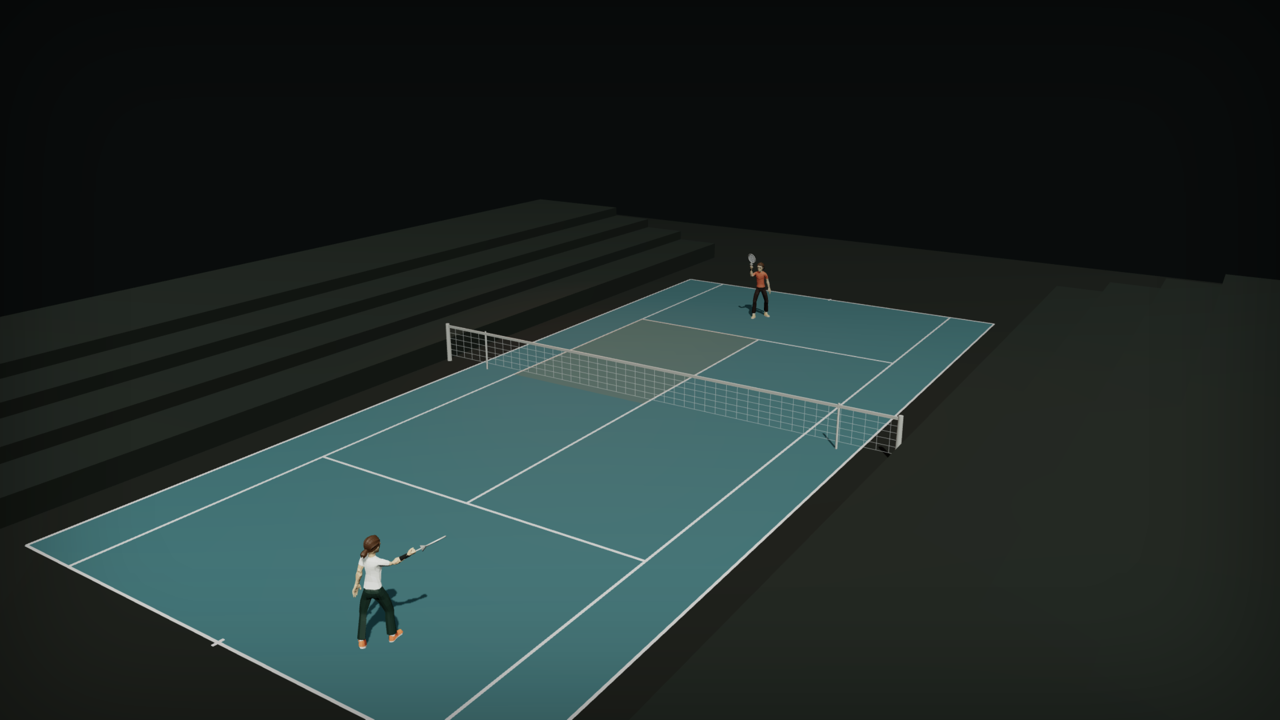
The highlighted box is the legal landing area. Compare the first point, the next point and a serve that clips the net but still lands correctly.
Loading the service court…
RIGHT → DIAGONALThe game begins from the server’s right, aiming into the receiver’s right service box across the net.
Drag to rotate · Double-click to reset01 / POSITION
Stand behind the baseline
The server begins between the centre mark and a singles sideline. During the service motion, the server cannot touch the baseline or the court, or step outside the allowed area.
The first point starts from the right side, often called the deuce court. The server changes side after every point in that game.
02 / TWO CHANCES
A first fault is not the point
A serve is a fault if it misses the correct box, fails to cross the net, or is delivered with an illegal foot position. After a first fault, serve again from the same side.
A second consecutive fault is a double fault, and the receiver wins the point.
03 / LET
Net and in means try again
If the served ball touches the net, strap or band and then lands in the correct service box, the serve is a let and is replayed.
If it touches the net and lands outside the correct box, it is simply a fault. During a normal rally, however, a ball may touch the net and continue if it crosses legally.