SHOTS · BASELINE
Forehand and backhand: two ways to control the baseline
A groundstroke is a forehand or backhand hit after the bounce. The goal is not a huge swing; it is a balanced contact in front of you, followed by a ball that clears the net safely.
Checked against the 2026 ITF Rules of Tennis · Updated 1 September 2026Build both sides around the same idea
- 01Move first so the ball is beside you, not directly at your feet.
- 02Meet it in front of the body with space between you and the ball.
- 03Swing through the target and recover instead of admiring the shot.
INTERACTIVE CONTACT PATHS
Compare the forehand, backhand and topspin arc.
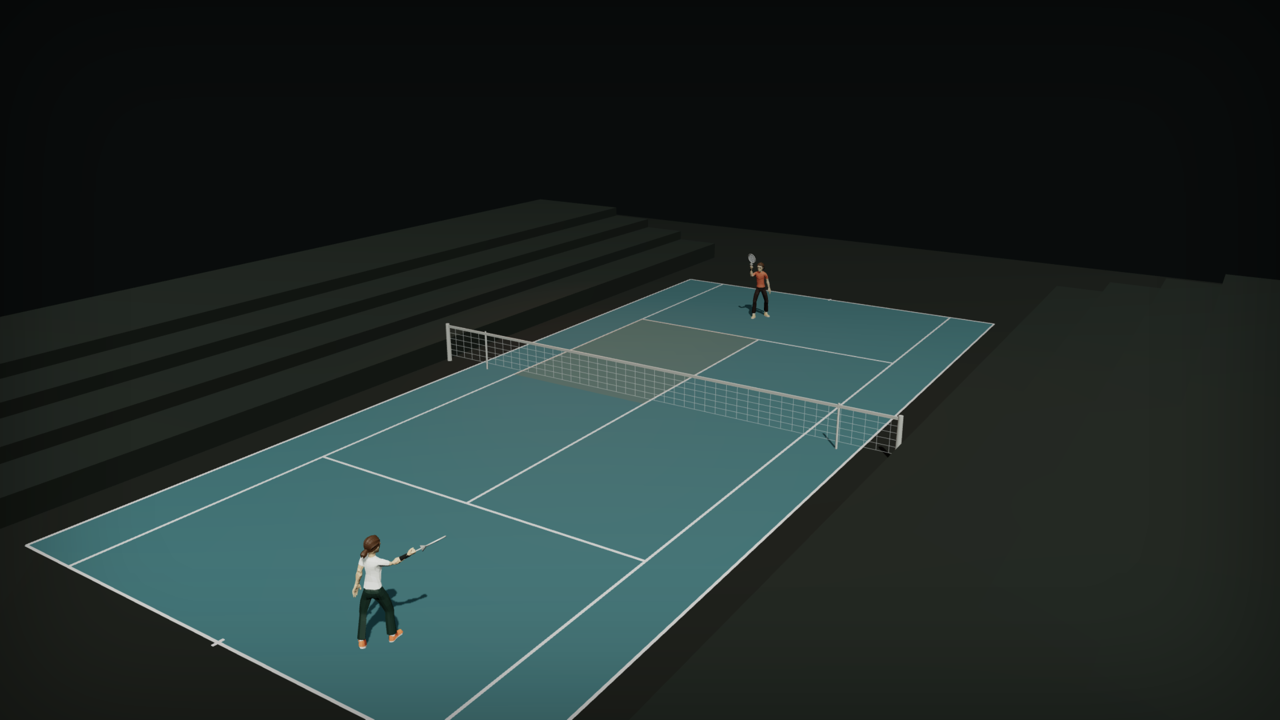
The player moves before contact. Watch the safe height over the net and where each ball comes back down.
Loading groundstrokes…
MOVE · CONTACT · RECOVERThe player creates space on the dominant side, contacts in front and sends the ball cross-court.
Drag to rotate · Double-click to reset01 / SPACING
Do not let the ball crowd you
Small adjustment steps are part of every groundstroke. Move until the bounce will arrive a comfortable distance from your body.
If the ball reaches your feet, the racket has no clear path. More force will not fix the missing space.
02 / CONTACT
Meet the ball in front
Prepare while the ball travels, not after it bounces. Turn the shoulders, set the racket, then let the forward swing meet the ball in front of your body.
The exact contact height changes, but balance and a steady racket face matter more than copying one perfect pose.
03 / MARGIN
Use height and spin to keep the ball in
A useful rally ball passes comfortably above the net and lands deep enough to prevent an easy attack.
Topspin lets you swing with intent while helping the ball dip. Beginners should first find a repeatable arc before chasing maximum speed.