SHOTS · SERVE
Low serve, high serve and flick serve
All legal serves follow the same diagonal rule, but they do not need the same flight. Your choice decides whether the receiver moves forward or backward.
Reviewed against the BWF Laws of Badminton · Updated 31 August 2026Three serves, three clear purposes
- 01Low serve: skim the net and make an upward attack difficult.
- 02High serve: send the receiver deep; used mainly in singles.
- 03Flick serve: begin like a low serve, then surprise the receiver toward the back.
INTERACTIVE SERVE PATHS
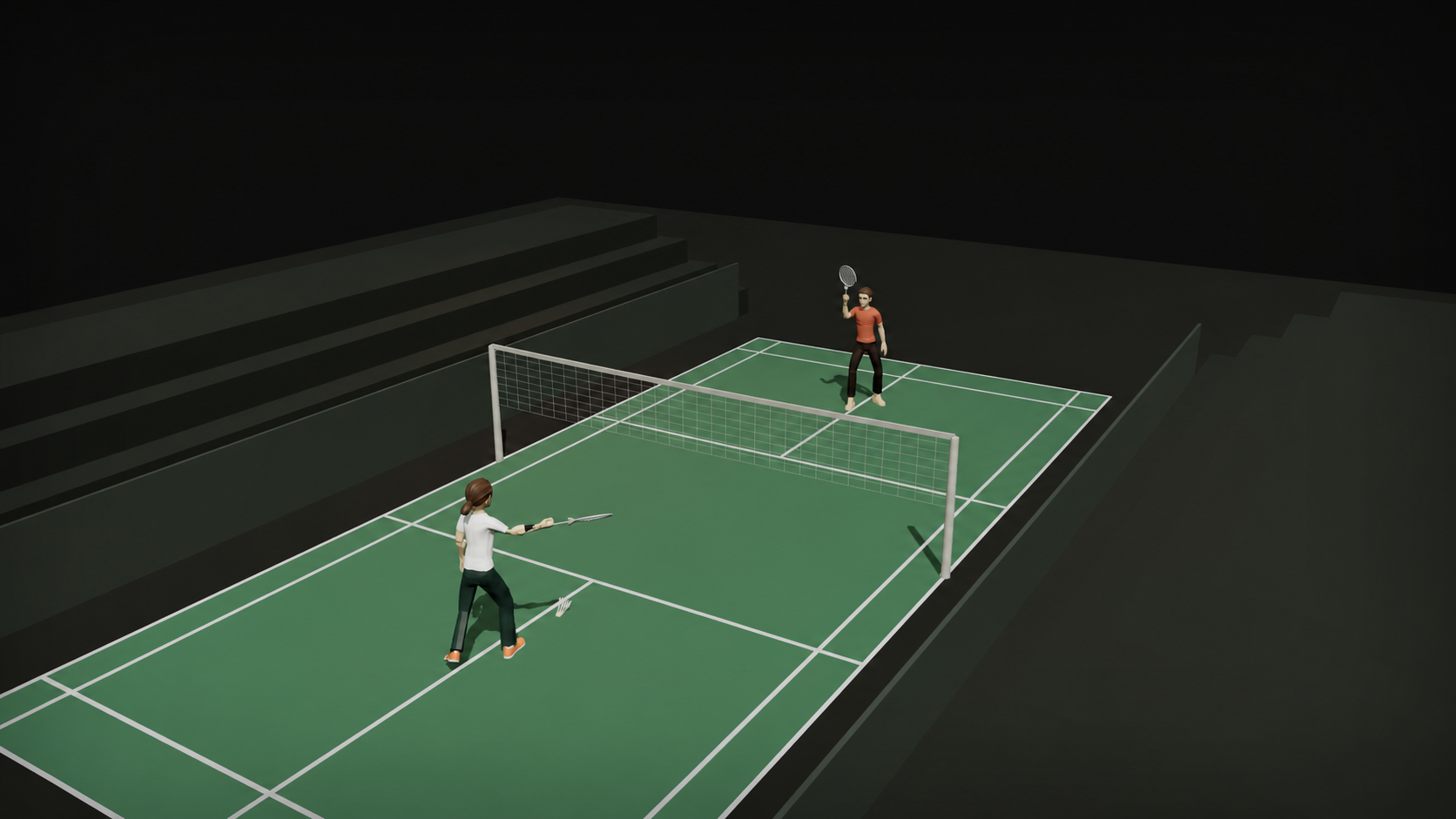
See how each serve uses the same diagonal box.
The target remains legal while the flight changes. Compare the low path, the deep high arc and the faster flick.
Loading serve paths…
LOW · FRONTThe low serve crosses close to the net and lands near the short service line.
Drag to rotate · Double-click to reset01 / LOW SERVE
Make the receiver hit upward
A good low serve passes close to the tape and begins to fall soon after crossing. Its job is not to win immediately; it is to prevent an easy downward return.
Aim safely beyond the short service line. A serve that is one centimetre lower but often hits the net is not better.
02 / HIGH SERVE
Use the full depth of the singles court
A high serve travels up and deep so the receiver contacts it near the back. It gives the receiver time, but moves the first shot away from the net.
This serve is mainly a singles option. In doubles, a high serve usually gives an attacking receiver too much time.
03 / FLICK SERVE
Use surprise, not every time
A flick serve copies the setup of a low serve, then uses a faster action to send the shuttle over a receiver who is leaning forward.
If you flick too often, it stops being a surprise. Mix it with a reliable low serve and keep both inside the correct diagonal box.