TACTICS · SINGLES
Where should you stand in badminton singles?
Good singles movement is not about standing on one magic dot. It is about hitting, recovering toward a useful base, and being ready as the opponent makes contact.
Reviewed against the BWF Laws of Badminton · Updated 31 August 2026Use this simple movement loop
- 01Start from a balanced base near the middle, usually a little behind centre.
- 02Move to the shuttle, hit, then recover—do not stay in the corner.
- 03As the opponent hits, make a small split step so you can push in any direction.
INTERACTIVE FOOTWORK MAP
Move out, hit, and recover.
The floor path shows the useful route, not a rigid line every player must copy. Switch between base, rear recovery and front recovery.
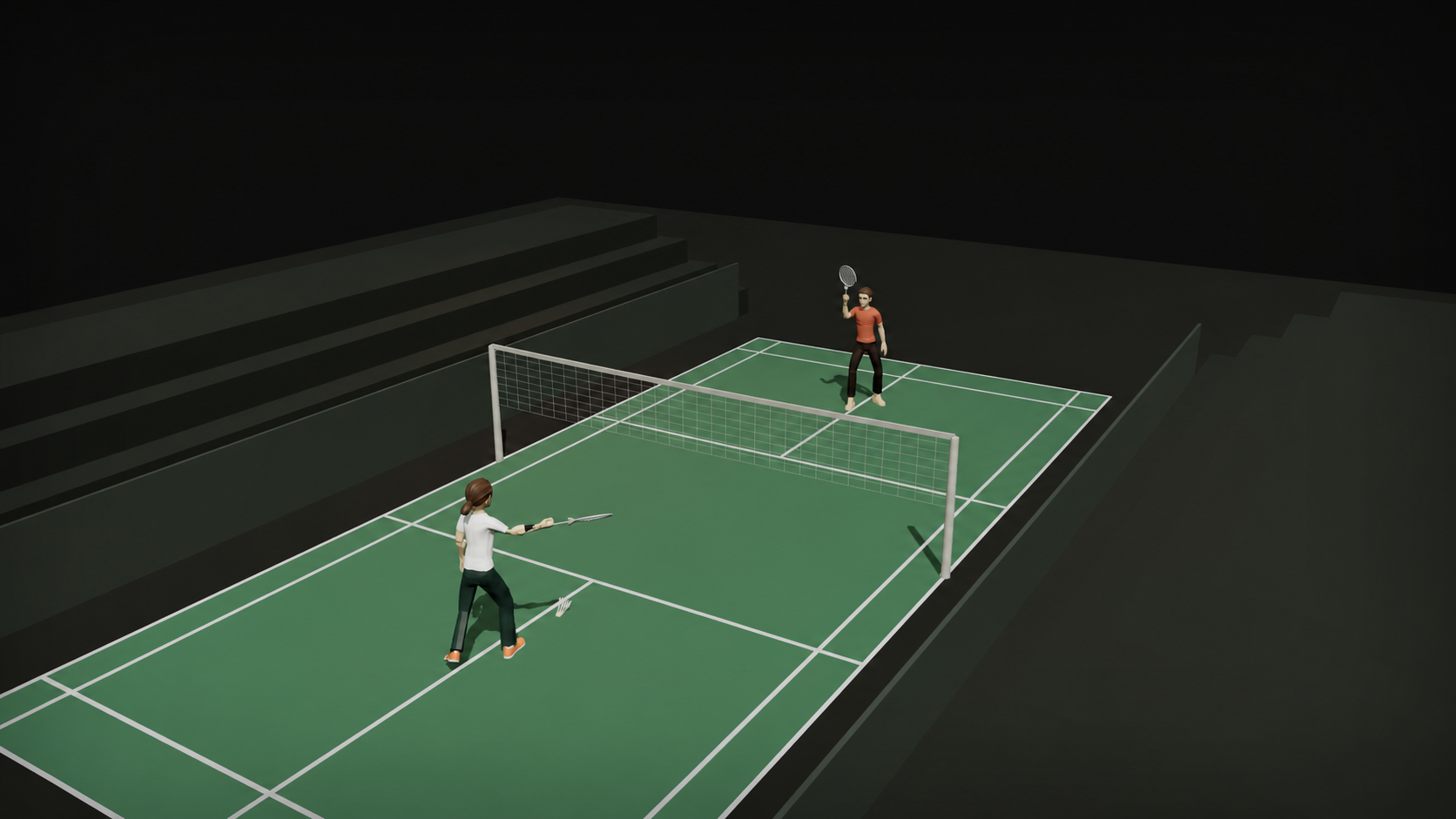
Loading the footwork map…
READY NEAR CENTREA useful base keeps all four corners reachable. Its exact position changes with your shot and the opponent.
Drag to rotate · Double-click to reset01 / BASE
The middle is a starting answer, not a fixed address
A common base is near the centre and slightly behind it, because rear corners usually take more time to reach than the front.
But your best base moves. After a strong deep shot, you may recover closer to the middle. After a weak short return, you may need to protect the front more.
02 / MOVE AND RECOVER
Finish the shot before rushing home
Move to the shuttle with enough balance to hit. Then use a controlled first recovery step. Turning and running blindly to the centre can make you late for the next shot.
The aim is to be moving toward a useful position by the time the opponent hits—not necessarily to touch an exact centre mark.
03 / SPLIT STEP
Be light when the opponent makes contact
Use a small bounce or split step as the opponent strikes. Land balanced with the feet apart, then push toward the new shuttle direction.
If you land too early, you may become flat-footed. If you jump too high, you lose time. Keep it small.