TACTICS · COURT POSITION
Hit, recover, and use depth before chasing the lines
Good tennis is not only about the shot you hit. It is also about where that shot makes the opponent move—and where you stand while waiting for the reply.
Checked against the 2026 ITF Rules of Tennis · Updated 1 September 2026A simple plan for most rallies
- 01Use depth to keep the opponent behind the baseline.
- 02Recover toward the likely reply, not blindly to the exact centre.
- 03Use a sharper angle after you have created space.
INTERACTIVE RALLY SHAPES
Watch the ball and both players move together.
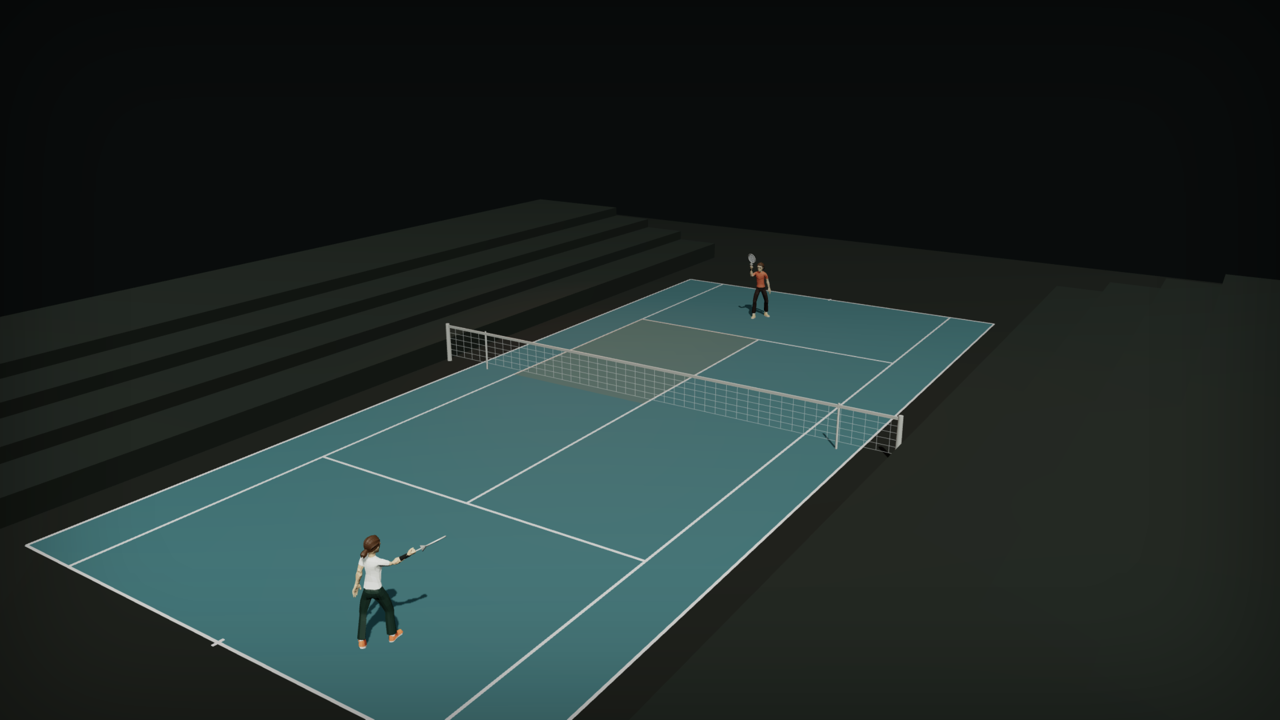
Compare a deep neutral ball, a wide attacking ball and the recovery step that closes the most dangerous open court.
Loading tactical examples…
DEEP BALL → SHORTER REPLYA deep ball pushes the opponent back and makes an aggressive reply harder.
Drag to rotate · Double-click to reset01 / DEPTH
Deep is useful even when it is not a winner
A ball landing near the baseline makes the opponent hit from farther back and often from a higher, less comfortable bounce.
Aim with margin. A ball one metre inside the baseline is usually more useful than repeatedly missing while trying to paint the line.
02 / ANGLE
Open the court before attacking it
Cross-court shots travel over the lower middle of the net and have more court available, which makes them a sensible rally pattern.
A sharper angle becomes valuable after the opponent has been moved away. Angle without a setup can also open your own court.
03 / RECOVERY
Your next position depends on your last shot
After a central ball, recovering near the middle often makes sense. After a wide cross-court ball, shift toward the likely cross-court reply rather than returning to a fixed painted spot.
Begin moving as soon as balance allows. Waiting to see the opponent hit leaves too much distance to cover.